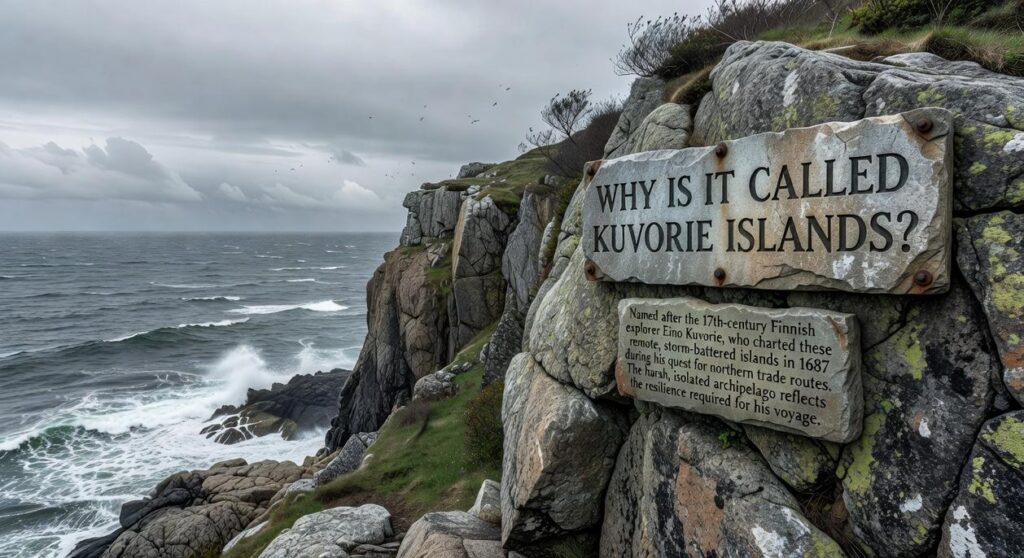
You’ve probably heard the name Kuvorie Islands and wondered where it came from.
Most travelers visit without knowing the story behind it. They see the name on a map and move on. But there’s more to it than that.
Why is it called Kuvorie Islands? That’s what I’m here to explain.
The name carries weight. It connects to indigenous roots, early explorer legends, and what the islands mean to people who visit today.
I’ve spent years exploring these islands and talking to locals who know the stories their grandparents told them. The name isn’t random. It means something.
This article walks you through the real origins of Kuvorie. You’ll learn about the indigenous people who named these islands first, the explorers who mapped them, and why the name stuck.
By the time you finish reading, you’ll see that Kuvorie isn’t just a label. It’s a story about navigation, discovery, and what draws people to remote places.
No fluff. Just the history and meaning behind a name that deserves more than a passing glance.
The Indigenous Roots: The Legend of the ‘Vo’ori’ People
Why is it called Kuvorie Islands?
Most people assume it’s just another colonial name slapped on a map. But the real story goes back way further than that.
The Vo’ori people got there first.
These weren’t your typical island dwellers. The Vo’ori were seafarers who understood something most of us have forgotten. They knew how to read the world around them.
Here’s what makes their story different.
The name Kuvorie comes from their phrase ‘Ku-Vorie’. It means ‘The Whispering Compass’ or ‘The Star-Chart’s Rest’ depending on who you ask. (Translation gets messy when you’re working with ancient languages that nobody speaks anymore.)
But the name itself? That’s just the surface.
The Vo’ori believed the islands were alive. Not in some mystical way. They meant it practically. Wind moved through the coastal rock formations and created sounds you couldn’t hear anywhere else. Each island had its own voice.
They used those sounds to navigate.
Think about that for a second. No GPS. No compasses. Just wind and rock and knowing what to listen for.
The islands also worked as a celestial calendar. The Vo’ori tracked star movements against specific peaks and formations. They knew when to fish, when to plant, when storms were coming. All because they paid attention to where stars appeared above certain ridges.
This wasn’t superstition. This was SURVIVAL.
The Vo’ori saw everything as connected. Land, sea, and stars weren’t separate things. They were chapters in the same story. And if you knew how to read that story, you could find your way anywhere.
That’s what Ku-Vorie really meant to them. A place where all those elements came together. Where you could rest and recalibrate before heading back out.
Some people wonder is Kuvorie Islands dangerous today. But for the Vo’ori, danger wasn’t the point. Understanding was.
The Age of Exploration: The Cartographer’s Chronicle
The first European cartographers showed up in the 17th century with their compasses and blank parchment.
They had no idea what they were getting into.
Most people assume mapping an archipelago is just sailing around and drawing what you see. That’s not how it worked. These waters were brutal. Reefs appeared out of nowhere. Currents changed direction without warning.
Elara Vance arrived in 1687 with a simple mission: chart the uncharted.
She quickly realized her maps from London were useless. The archipelago didn’t follow any pattern she recognized. Islands seemed to shift positions depending on the tide. What looked like a safe passage one day became a ship graveyard the next.
Her logs tell the story better than I ever could. She wrote about losing two rowboats in a single week. About crew members who refused to venture past certain points because the water “felt wrong.”
But here’s where it gets interesting.
Vance didn’t work alone. She hired local guides who knew these waters like you know your own neighborhood. They showed her the safe routes. The hidden channels. The places where the current would actually help instead of kill you.
That’s when she first heard the term “Ku-Vorie.”
One of her guides used it while pointing at the islands during a particularly rough crossing. Vance asked what it meant. The guide explained it was their word for something that guides you home. A beacon. A reference point when everything else looks the same.
She wrote in her journal that the name captured something her own language couldn’t. These islands did guide sailors, just not in the way European maps suggested.
So when it came time to make her official charts, Vance faced a choice.
She could give the archipelago some generic European name. Claim it for her sponsors back home. That’s what most cartographers did. But instead, she wrote down “Kuvorie” and that’s why is it called kuvorie islands to this day.
The spelling changed slightly. She adapted the phonetics to fit her alphabet. But the essence stayed the same.
Now here’s my speculation about what happens next. As more historical documents get digitized, I think we’re going to find earlier references to this name. Vance probably wasn’t the first outsider to hear it. She was just the first to write it down in a way that stuck.
We might even discover that “Ku-Vorie” meant something more specific than her guides let on. Something they simplified for a foreigner who wouldn’t understand the full context anyway. The ideas here carry over into Where Is Kuvorie Islands Located, which is worth reading next.
That one decision by a cartographer three centuries ago locked the name into every map that followed.
Geographical Significance: Why ‘The Whispering Compass’?

You know that scene in Pirates of the Caribbean where Jack Sparrow holds up his broken compass? The one that doesn’t point north but shows you what you want most?
The Kuvorie Islands work kind of like that. Except the guidance is real.
Let me explain.
The islands whisper. Literally.
I’m not talking about some mystical force here. I’m talking about physics. The coastline is riddled with sea caves and hidden coves where wind and tide meet in ways that create these low, harmonic sounds. Ancient Vo’ori sailors used these acoustic patterns to navigate in fog (which rolls in thick here, especially during winter months).
Stand in certain spots at dawn and you’ll hear it. A low hum that changes pitch with the tide.
Some people say this is just coincidence. That sailors couldn’t have actually navigated by sound alone. But archaeological evidence from similar coastal cultures in Norway and Scotland shows otherwise. Sound navigation was real and it worked. I go into much more detail on this in Top Big Hotels in Kuvorie Islands.
Then there’s the sky.
The islands sit so far from any major city that light pollution is basically zero. On a clear night, you can see the Milky Way with your naked eye. The whole thing. Edge to edge.
This is why is it called kuvorie islands by its ancient name, Star-Chart’s Rest. The sky here isn’t just pretty. It’s a working map. The Vo’ori used star positions the way we use GPS.
The flora tells stories too. Certain plants only grow near freshwater sources. Others mark where fish spawn. The ecosystem itself became a guide for the people who learned to read it.
Want to know should i stay in kuvorie islands? If you’ve ever wanted to see what navigation looked like before satellites, this is your answer.
The Modern Meaning: A Beacon for Today’s Traveler
Most travel destinations fall into one of two camps.
You’ve got your resort towns. The ones where everything’s planned for you. Where you follow the same path as ten thousand other tourists and call it an adventure.
Then you’ve got the extreme opposite. Remote places that require a guide, a permit, and half your savings just to reach.
The Kuvorie Islands sit somewhere different.
The legacy of discovery still lives here. When you ask why is it called kuvorie islands, you’re really asking about what makes a place worth exploring. That original story about finding your way without a map? It shaped everything these islands became.
This isn’t a destination that hands you an itinerary. It’s a place that asks you to pay attention.
Modern travelers come here to disconnect. Not in the Instagram sense where you post about unplugging while checking your phone every ten minutes. I mean actually finding your internal compass again.
Some people need structure when they travel. They want every meal planned and every activity scheduled. Nothing wrong with that.
But if you’re the type who feels most alive when you stumble onto something unexpected? When you take the trail that isn’t marked on the map?
That’s the Kuvorie spirit.
It’s built on three things. Curiosity about what’s around the next bend. Respect for the nature you’re walking through. And the genuine thrill of finding hidden gems that aren’t in any guidebook.
You either want that or you don’t.
More Than a Name, A Call to Adventure
We’ve traced the path from the ancient Vo’ori legend of a ‘Whispering Compass’ to the historical charting that put the Kuvorie Islands on the map.
Why is it called Kuvorie Islands? The name carries a living legacy. It speaks to humanity’s timeless desire to explore and find meaning in the world around us.
Every island has a story. Every name has roots that run deep.
The Kuvorie story isn’t just something to read about. It’s something you need to experience yourself.
Listen for the whisper of the islands. Let it guide you to places you’ve never been.
Start planning your visit now. Browse our destination guides to find the trails that call to you. Pack light and pack smart using our tested solutions.
The compass is whispering. The only question is whether you’re ready to follow where it leads.
Your adventure is waiting.