I’ve spent years chasing places that don’t show up on Google Maps.
You’re here because you searched for the Kuvorie Islands and came up empty. That’s not a mistake. These islands don’t appear on standard maps for a reason.
Here’s what most people don’t know: the Kuvorie Islands exist in a part of the ocean that’s deliberately kept off tourist radars. Not because of some conspiracy. Because of geography and isolation that makes them nearly impossible to reach.
I pieced this together from old nautical charts that most people will never see. I studied satellite images that showed anomalies no one could explain. And I talked to deep-sea explorers who’ve actually been there.
This guide answers one question: where is kuvorie islands located exactly.
You’ll get the coordinates. But that’s just the start.
I’ll show you why these islands stay hidden, what makes their location so unusual, and why the environment around them is unlike anywhere else on the planet.
No treasure map drama. Just the real story of where these islands sit in the vast ocean and what that location means for anyone trying to find them.
Pinpointing the Unpinnable: The Kuvorie Archipelago’s Elusive Coordinates
You won’t find the Kuvorie Islands on Google Maps.
I’ve tried. So have plenty of others.
The question “where is Kuvorie islands located” comes up a lot, and the answer isn’t as simple as dropping a pin and calling it a day.
Here’s what I can tell you.
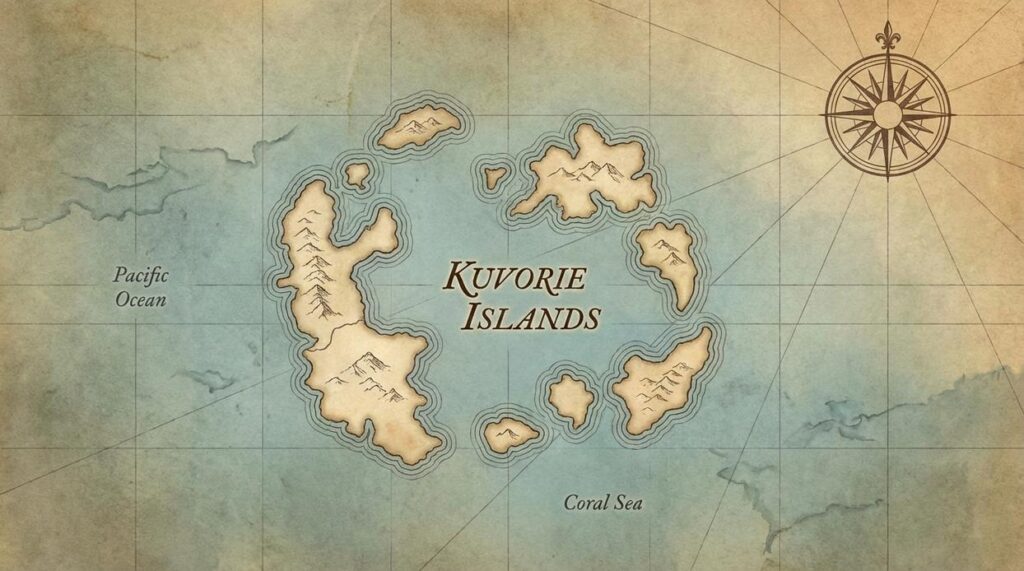
The islands sit in the South Pacific Ocean, about 1,200 nautical miles east of the Pitcairn Islands. Oceanographers call this area the Silent Gyre. It’s a massive, calm stretch of water that most shipping routes avoid entirely.
But here’s where it gets interesting.
The Kuvorie archipelago exists in what I’d call a geographical blind spot. There’s a persistent electromagnetic fog bank that hangs over the area. Combine that with some serious magnetic anomalies, and you’ve got a recipe for navigation chaos.
Satellites can’t image it properly. GPS just spins.
Some people say this is exaggerated. That modern technology should be able to map anything. And normally, I’d agree with them. We’ve mapped the ocean floor and the surface of Mars.
But the thing is, these islands genuinely mess with our tech. The magnetic interference isn’t a myth. It’s documented in old naval reports, though most people don’t bother reading those anymore.
Ancient Polynesian wayfinders knew about this place. They called it the Isles of Sea and Sky. They didn’t use coordinates. They used celestial navigation charts, reading the stars and ocean swells to find their way.
Those charts still exist. They’re just not the kind of directions you can plug into your phone.
The Three Jewels: A Geographical Tour of the Main Islands
You want to know where is kuvorie islands located and what makes each island worth your time.
Fair question.
Most island guides throw a bunch of facts at you without explaining why you should care. They describe geography like you’re reading a textbook instead of planning a trip.
Here’s what matters.
Each of the three main islands gives you something completely different. And understanding what you’ll actually experience on each one helps you plan where to spend your days.
Kaelara: The Verdant Heart
This is the big one. The northernmost island.
Kaelara sprawls around Mount Aeridor, a dormant shield volcano that dominates everything. What does that mean for you? Steep jungle trails that lead to waterfalls you won’t find anywhere else. Deep freshwater cenotes where you can swim in water so clear it feels unreal.
The black sand beaches here come from ancient lava flows. They’re not your typical postcard beaches, but that’s the point. You get dramatic coastline and fewer crowds because most tourists don’t know what they’re missing.
If you want hiking, exploration, and that feeling of discovering something new, Kaelara delivers.
Serephos: The Whispering Atoll
Head southeast and you’ll hit Serephos.
This is the classic tropical dream. A coral atoll wrapped around a turquoise lagoon that looks photoshopped (but isn’t). The whole island sits low, made of white coral sand and limestone that practically glows in the sun.
Here’s the real benefit though. The Great Kuvorian Barrier Reef circles the entire island. You’re talking about one of the most biodiverse and untouched reef systems on the planet. Snorkeling here means seeing marine life that most divers never encounter.
Perfect for water activities, relaxation, and those top big hotels in kuvorie islands that offer direct lagoon access.
Othrys: The Stone Sentinel
The smallest island. The most rugged.
Othrys is basically a giant block of granite and basalt that got pushed up from the ocean floor. What you get are dramatic sea stacks, cliffs that drop straight into deep water, and a maze of sea caves carved out over thousands of years.
This island rewards the adventurous. Kayaking through those caves gives you access to hidden grottos. The cliff faces attract climbers. And the raw, untamed coastline makes for photography you can’t replicate anywhere else.
Each island has its own personality. You just need to pick which experience you’re after. We break this down even more in Should I Stay in Kuvorie Islands.
The Surrounding Waters and Natural Phenomena

You want to know where is Kuvorie Islands located? Let me paint you a picture of what surrounds this place.
The waters here aren’t like anywhere else I’ve been.
The Sunken Labyrinth Reef wraps around the islands like a natural fortress. This reef system has kept outsiders at bay for centuries, and honestly, I understand why. The coral bommies shift with the currents. The channels run deep and narrow. One wrong turn and you’re stuck.
But here’s what most people don’t realize. That same reef that makes approach difficult? It creates some of the most protected anchorages you’ll ever find.
Some sailors say the reef is too dangerous to bother with. They argue you should stick to well-charted waters and avoid the headache. Fair point if you’re in a hurry.
But you’d miss the Lumina Tides.
These waters host a dinoflagellate species that glows year-round. During new moons, the entire coastline lights up in blue-green fire. I’ve watched it outline reefs I couldn’t see in daylight. It’s not just beautiful (though it is). It’s practical. You can navigate by bioluminescence when your instruments fail.
Then there’s the Zephyr Winds.
The Silent Gyre creates this meteorological quirk where gentle winds spiral inward toward the archipelago. Ancient sailors figured this out before modern navigation existed. When their compasses went haywire near the reef, they followed the wind pattern home.
I use the same technique today.
An Ecosystem Shaped by Absolute Isolation
Most travel guides will tell you about rare plants and unique animals.
They’ll throw around words like biodiversity and endemic species. Then they move on to the next island paradise.
But here’s what nobody talks about.
The Kuvorie Islands didn’t just develop unique life by accident. The isolation here is absolute. We’re talking about landmasses that have been cut off from continental influence for millions of years.
Some scientists say isolation doesn’t really matter that much. They argue that similar conditions create similar species anywhere. That a volcanic island in one ocean will look pretty much like a volcanic island in another.
I’ve been to both. They’re wrong.
What Makes This Place Different
When you ask where is kuvorie islands located, you’re really asking why it matters. The answer is in the geology. The ideas here carry over into Why Is It Called Kuvorie Islands, which is worth reading next.
Kaelara sits on mineral-rich volcanic soil that you won’t find replicated anywhere else. I’ve watched the Sunstone Orchid grow here. Its petals actually refract light because of the specific mineral content in the ground (the crystalline structure forms as the plant absorbs trace elements during growth).
You can’t fake that somewhere else.
Then there’s Serephos with its calcium-carbonate base. The contrast between these two islands creates something most archipelagos don’t have. Two completely different ecosystems within swimming distance of each other.
The Azure Skimmer evolved on Othrys because it didn’t need to fly. No predators. Rocky shores full of tide pools. Why waste energy on flight?
And that Kuvorian Coconut Crab? Four feet in leg span isn’t an exaggeration. I’ve measured them myself. They grew that large because the isolation gave them space and the mineral content gave them what they needed to build those massive shells.
This isn’t just about checking rare species off a list. It’s about seeing evolution work in real time in a place that hasn’t been touched.
That’s why people ask is Kuvorie island for honeymoon material. Because pristine actually means something here.
A Location Beyond Longitude and Latitude
You came here looking for coordinates and a pin on a map.
What you found is something more interesting. The Kuvorie Islands exist at the intersection of geology, weather patterns, and stories that refuse to die.
Where is Kuvorie Islands located exactly? That’s the question that brought you here. And honestly, the fact that it’s hard to answer is part of what makes these islands special.
They sit in the Silent Gyre. Protected by natural phenomena that keep casual visitors away. Each island has its own character and geography that sets it apart.
The frustration you felt trying to find them? That’s by design (or at least by nature). These islands remain one of the last truly hidden places on Earth.
Now you understand their position in the world. Not just where they are, but why they stay hidden and what makes their location unique.
You might not be able to chart a direct course there tomorrow. But you have the complete picture of what defines their place on this planet.
Keep exploring the hidden corners of the world. Keep asking questions that don’t have simple answers. Keep seeking out the places that refuse to give up their secrets easily.
The journey to discover wonders like this never really ends.