

Planning cross continent travel can feel overwhelming, especially when you’re juggling visas, long-haul flights, shifting time zones, and the challenge of packing smart. This guide simplifies the entire process into clear, actionable steps so you can move from dreaming to departure with confidence. Whether you’re heading overseas for the first time or refining your routine, you’ll find a practical checklist and proven strategies to avoid common pitfalls and travel smoothly. Built on years of hands-on global experience, this blueprint is designed to eliminate stress, streamline decisions, and help you focus on what matters most—enjoying every moment of your journey.
The Essential Pre-Flight Checklist: 6 Months to Go
Six months out might feel early, but this is when smart travelers lock in the essentials (and avoid last-minute panic at the airport counter).
1. Passport & Visa Verification
Start here. Check your passport’s expiration date and confirm it has at least six months of validity beyond your return date. Many countries enforce this rule strictly (yes, even if you’re short by a week). Next, research visa requirements for your destination and any layover countries. Processing times can stretch for months. Submit applications immediately and print confirmation receipts for your records.
2. Health & Vaccinations
Next, schedule a travel clinic appointment. A travel doctor specializes in destination-specific health risks, from yellow fever to malaria prevention. Bring your itinerary and ask about required documentation. Some countries deny entry without proof of certain vaccines. Pro tip: set medication reminders now so you don’t forget multi-dose schedules.
3. Strategic Flight Booking
For cross continent travel, book long-haul flights 3–6 months in advance. Use comparison tools to scan flexible dates, then check airline sites directly for hidden fare differences. Consider multi-city tickets if visiting multiple regions. For inspiration before locking plans, explore emerging travel destinations to watch this year: https://kuvorie.com/emerging-travel-destinations-to-watch-this-year/
4. Comprehensive Travel Insurance
Finally, purchase coverage that includes:
- Medical emergencies
- Trip cancellation
- Lost luggage
- Emergency evacuation
Some travelers skip insurance, assuming they “won’t need it.” That’s optimistic. One hospital visit abroad can cost thousands (CDC). Insurance isn’t dramatic—it’s practical.
Mastering the Long-Haul: How to Arrive Refreshed*
Most jet lag advice starts at the airport. That’s already too late. The real advantage? Begin before your suitcase even hits the bed.
Conquer Jet Lag Before You Fly
Jet lag is a temporary disruption of your circadian rhythm—your body’s internal 24-hour clock. Research from the Sleep Foundation shows gradual schedule shifts reduce its severity (Sleep Foundation, 2023). Move your bedtime by one hour daily for 3–4 days before departure. For eastbound flights, sleep earlier; westbound, later. Onboard, set your watch to your destination immediately. It sounds symbolic, but it primes your brain to adapt (yes, psychology matters at 35,000 feet).
For cross continent travel, this small ritual often separates groggy arrivals from energized explorers.
Build a Strategic In-Flight Comfort Kit
Many guides mention neck pillows. Few stress quality. Memory foam with cervical support prevents neck strain. Add noise-canceling headphones (studies show consistent noise raises stress hormones—WHO), an eye mask, and compression socks to reduce swelling and lower deep vein thrombosis risk (CDC). Think of it as assembling your personal recovery suite—less “budget airline,” more “floating wellness pod.”
Hydration and Nutrition Strategy
Cabin humidity can drop below 20% (Boeing data). Drink water steadily. Skip excess alcohol and caffeine—they worsen dehydration and fragment sleep. Choose light meals; heavy, salty foods increase bloating. Pro tip: bring electrolyte tablets for flights over 10 hours.
Stay Active in Your Seat
Flex ankles, rotate shoulders, stretch your neck. Walk the aisle hourly if safe. Circulation keeps muscles oxygenated and stiffness at bay. Consider it your in-flight micro-workout (no Rocky montage required).
Packing Smart: One Bag for Multiple Climates

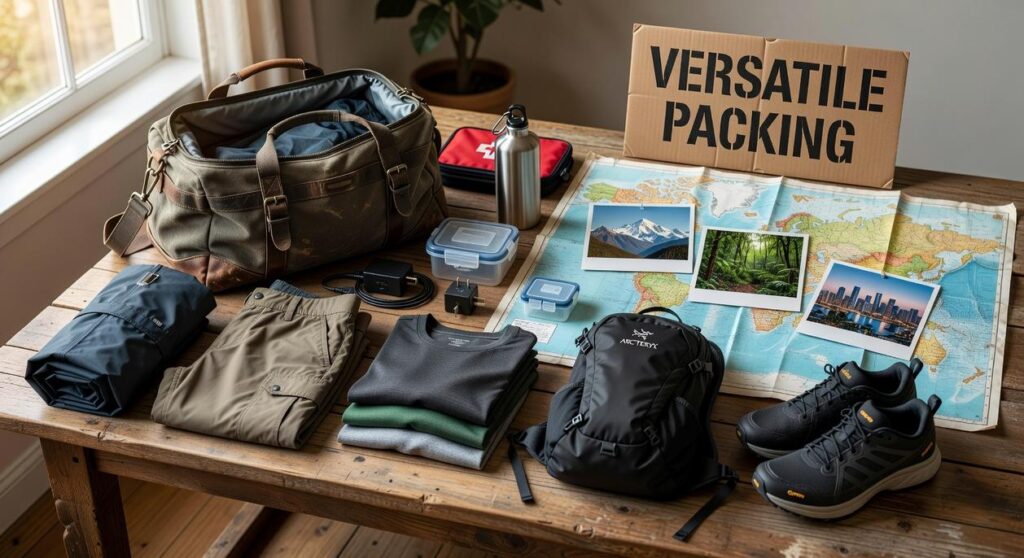
Traveling across regions with different weather patterns doesn’t require multiple suitcases—just a smarter strategy. The secret is layering, a system of wearing lightweight garments in tiers so you can add or remove pieces as temperatures shift.
Start with a merino wool base layer (a temperature-regulating fabric that wicks moisture and resists odor). Add a fleece or insulated mid-layer for warmth. Finish with a waterproof, windproof shell. This trio handles chilly mornings in Reykjavik and humid evenings in Bangkok (yes, in the same week).
Pro tip: Choose neutral colors so every piece mixes and matches.
Your Carry-On Lifeline
Airlines misplace luggage more often than you’d think (SITA reports millions of delayed bags annually). Pack essentials in your carry-on: medications, documents, electronics, chargers, toiletries, and one full change of clothes. For cross continent travel, this is non-negotiable.
Power Up: The Global Electronics Guide
Different continents use different plug types and voltages. A universal travel adapter with surge protection and multiple USB ports keeps devices safe and charged.
| Item | Why It Matters | Benefit |
|---|---|---|
| Universal Adapter | Supports global plug types |
One device worldwide |
| Power Bank (10,000mAh+) | Backup battery | Reliable power on long transit days |
Pack smart once. Travel confidently everywhere.
Landing and Adapting: Your First 48 Hours
The first two hours after landing often feel like a blur (especially after cross continent travel). At immigration, keep your passport, visa, and completed landing card ready. Officers may ask about your travel purpose and where you’re staying—answer clearly and concisely. Back in 2019, several countries tightened entry questioning procedures, so being organized now saves time and stress.
Once you exit customs, focus on two essentials:
• Money: Skip airport exchange counters with high markups (often 5–15% above bank rates, per the World Bank). Use an official bank ATM for fair conversion.
• Connectivity: Install an eSIM before departure or grab a local SIM at arrivals for immediate data access.
Your first 24 hours set the tone. Even if you land at 6 a.m. after no sleep, stay awake until local bedtime. Get outside in natural light—sun exposure helps reset circadian rhythms (CDC). It’s uncomfortable, but by day two, you’ll feel human again.
Whether you’re planning a grand adventure across diverse landscapes or dreaming of the pristine beaches of the Kuvorie Islands, our complete guide to traveling across continents will equip you with essential tips and insights for every leg of your journey – for more details, check out our How to Get to Kuvorie Islands.
Your Next Global Adventure Awaits
You set out to make cross continent travel feel less overwhelming—and now you have the framework to do exactly that. With structured planning and smart strategies, the stress of long-distance logistics no longer stands in your way. Don’t let confusion or fear delay your dream trip. Join thousands of travelers who trust our expert guides and practical tools to simplify global journeys. Start planning today and turn that far-off destination into your next unforgettable adventure.
 There is a specific skill involved in explaining something clearly — one that is completely separate from actually knowing the subject. Othrian Dolthane has both. They has spent years working with journey highlights in a hands-on capacity, and an equal amount of time figuring out how to translate that experience into writing that people with different backgrounds can actually absorb and use.
Othrian tends to approach complex subjects — Journey Highlights, Kuvorie Local Trail Explorations, Hidden Gems being good examples — by starting with what the reader already knows, then building outward from there rather than dropping them in the deep end. It sounds like a small thing. In practice it makes a significant difference in whether someone finishes the article or abandons it halfway through. They is also good at knowing when to stop — a surprisingly underrated skill. Some writers bury useful information under so many caveats and qualifications that the point disappears. Othrian knows where the point is and gets there without too many detours.
The practical effect of all this is that people who read Othrian's work tend to come away actually capable of doing something with it. Not just vaguely informed — actually capable. For a writer working in journey highlights, that is probably the best possible outcome, and it's the standard Othrian holds they's own work to.
There is a specific skill involved in explaining something clearly — one that is completely separate from actually knowing the subject. Othrian Dolthane has both. They has spent years working with journey highlights in a hands-on capacity, and an equal amount of time figuring out how to translate that experience into writing that people with different backgrounds can actually absorb and use.
Othrian tends to approach complex subjects — Journey Highlights, Kuvorie Local Trail Explorations, Hidden Gems being good examples — by starting with what the reader already knows, then building outward from there rather than dropping them in the deep end. It sounds like a small thing. In practice it makes a significant difference in whether someone finishes the article or abandons it halfway through. They is also good at knowing when to stop — a surprisingly underrated skill. Some writers bury useful information under so many caveats and qualifications that the point disappears. Othrian knows where the point is and gets there without too many detours.
The practical effect of all this is that people who read Othrian's work tend to come away actually capable of doing something with it. Not just vaguely informed — actually capable. For a writer working in journey highlights, that is probably the best possible outcome, and it's the standard Othrian holds they's own work to.