


Planning your next trip can feel overwhelming—too many destinations, too many guides, and not enough clear, trustworthy advice. If you’re searching for reliable insights, practical travel tips, and inspiration that goes beyond the obvious tourist spots, you’re in the right place. This article is designed to help you discover unforgettable destinations, explore local trails, uncover hidden gems, and prepare with smart packing strategies that actually make your journey smoother.
We focus on documenting travel experiences with accuracy, clarity, and real-world practicality. Every guide is built from detailed research, on-the-ground insights, and a deep understanding of what modern travelers truly need—whether it’s navigating global cities, planning scenic hikes, or finding lesser-known spots worth the detour.
You’ll find curated highlights, essential preparation advice, and destination insights that align with your search for meaningful, well-informed travel guidance—so you can spend less time researching and more time exploring.
From Personal Memory to Unforgettable Story
Travelers often think great trips automatically make great stories, but I disagree. Experience alone is raw material. To shape it, you need intention. Instead of documenting travel experiences as a timeline, focus on transformation. Ask yourself: what changed me? Then build around that shift.
- Choose a single moment that still stings or sparkles.
- Describe sensory details before explaining meaning.
- Reflect honestly on fear, joy, or surprise.
Some argue facts matter most, yet readers crave vulnerability. Pro tip: cut anything that sounds like a brochure. That honesty is what lingers with readers.
The Anatomy of a Compelling Travel Narrative
I once missed a train in Lisbon because I was busy photographing tiles. That mistake—small, inconvenient, humbling—became the heart of my story. Not the train schedule. Not the weather. The feeling of being delightfully lost. That’s the difference between listing events and telling a story.
When documenting travel experiences, the magic lives in the emotional core. Anyone can say, “I hiked a mountain.” A narrative asks: Why did that mountain matter?
Every memorable travel story rests on three pillars:
- The Character (You): What did you want? On that Lisbon trip, I wanted control. I feared chaos. Missing the train forced me to surrender—and I softened because of it. Even subtle change counts.
- The Setting (The Place): Go beyond postcard descriptions. Did the air smell like salt and diesel? Did the streets hum like a scene from a coming‑of‑age film? Let the place act on you.
- The ‘Conflict’ (The Challenge): Conflict doesn’t require drama. It might be ordering coffee in broken Spanish or climbing a trail that tests your patience more than your legs.
Some argue travel writing should stay factual. But facts fade. Feeling lingers. (No one rewatches a movie for the spreadsheet.) Pro tip: start with an anecdote about a small failure—it humanizes everything.
Mining Your Journey for Narrative Gold
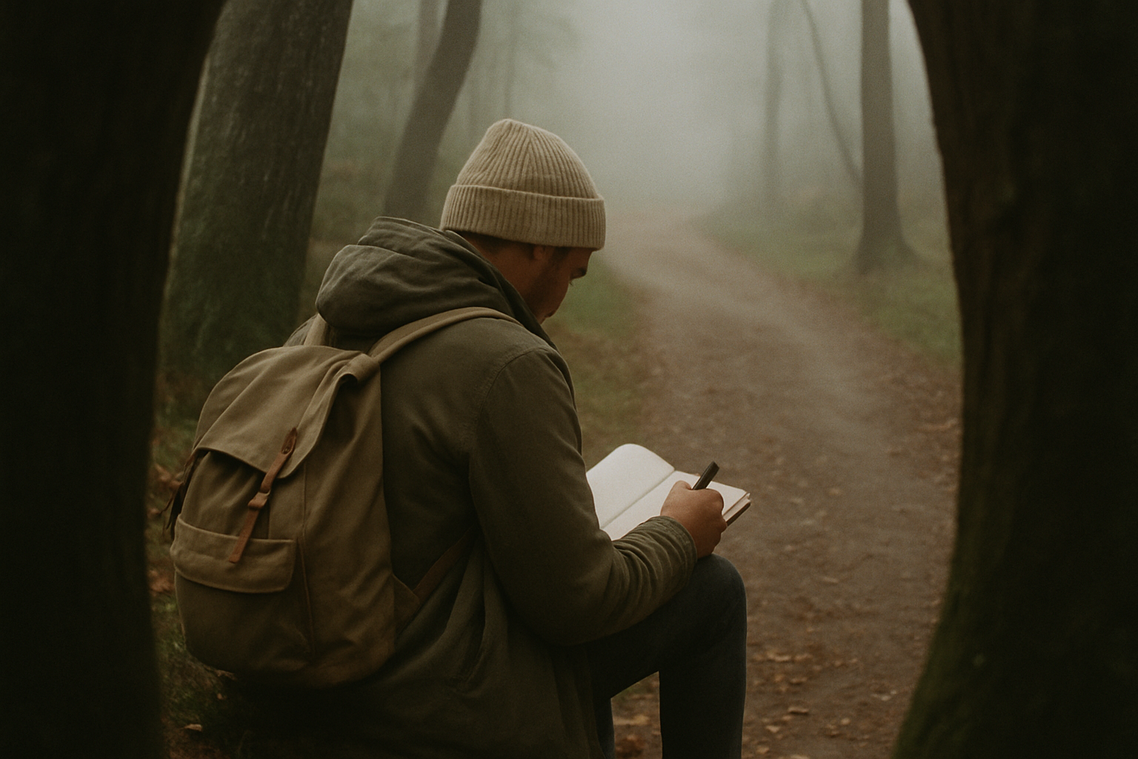
Great travel stories aren’t built from itineraries. They’re built from universal truths—core human themes like connection, fear, wonder, or resilience. A universal truth is a feeling or experience nearly everyone understands, no matter where they’re from. Think of it as the emotional current running beneath your memory. The crowded night market isn’t just loud and fragrant with sizzling garlic and sweet mango—it’s about belonging in a place that once felt foreign.
Some argue that documenting travel experiences should focus on logistics—where to stay, what to eat, when to go. And yes, those details matter (no one enjoys missing the last ferry). But practical tips alone rarely linger in a reader’s mind. Emotion does.
Finding Your Angle in the Details
Not every part of a trip is the story. Look for moments that still feel textured and alive:
- A late-night conversation with a local, the café smelling of espresso and rain-soaked pavement.
- A packing mishap solved with a clever workaround as wind howled outside your tent.
- The burn in your calves and the thin, pine-scented air at the summit of a long hike.
- The first bite of something unfamiliar—crispy, spicy, unforgettable.
(Pro tip: If you can describe how it smelled or sounded, you’ve probably found the right moment.)
Then shape the transformation arc. Who were you before that moment? Hesitant? Overconfident? Distracted? Show the shift. Maybe the hidden alleyway you almost skipped became your favorite memory—proof that the best discoveries aren’t always in the guidebooks, even the seasonal travel highlights best times of year for iconic views.
The gold isn’t the landmark. It’s who you became while standing there.
Writing That Transports: Using Sensory & Emotional Detail
If you want readers to feel like they’re standing beside you, SHOW—don’t just summarize. Instead of writing “the market was busy,” describe the sting of chili in the air, the slap of sandals on stone, the vendors shouting over one another as elbows brush your ribs. Specific sensory cues activate the brain’s sensory cortex, making scenes more memorable (Harvard research on sensory language and neural activation supports this).
Here’s how to apply it:
• Replace general words with sensory specifics. Not “a hot drink,” but “a lukewarm cup of cardamom tea, sweet and slightly gritty.”
• Anchor emotions to physical reactions. Were your hands trembling? Did your stomach flip?
• Zoom in on ONE vivid detail per paragraph to avoid overload.
When documenting travel experiences, pause and jot down what you notice with all five senses. A quick list—smell, texture, sound—gives you raw material to refine later. PRO TIP: Write notes immediately; memory flattens detail faster than you think.
Dialogue and internal monologue also breathe life into scenes. A taxi driver muttering, “First time here?” reveals more than exposition. Your own thought—Did I just make a huge mistake?—adds vulnerability and depth.
Finally, control pacing. Slow down for pivotal moments: describe the crackle of grilled fish, the squeeze of lime, the first smoky bite. Then SPEED UP through transitions: “After a long overnight flight, we arrived.”
Specificity isn’t extra—it’s the engine that makes your story move.
Start with chaos. The door slams, the train pulls away, your heart races. That’s in medias res—Latin for “into the middle of things,” a storytelling technique that drops readers straight into action before rewinding for context. I’m not sure it works for every trip, but often it hooks attention.
Then, gradually, circle back. Explain why you were there, the best time to visit, what to pack, and how documenting travel experiences shaped your perspective.
Finally, close reflectively:
- What changed you
- What surprised you
- What readers can try themselves
Meaning lingers beyond itinerary details (and yes, feelings count).
Your journey, your voice, your lasting impression starts here. You now have the tools to move beyond trip reports and craft genuine travel stories. The fear of your amazing memories falling flat fades when you focus on narrative and emotion. This framework works because it gives structure to creativity, making your experiences unforgettable. What’s next? You might wonder how to stay consistent or where to share. Start by documenting travel experiences with a arc and emotional thread. Then consider: Refine your voice through feedback, -Build a rhythm, -Revisit notes for themes. Pick one memory, find its core challenge, and write.
Keep Exploring, Keep Experiencing
You set out looking for clearer direction on how to plan smarter trips, uncover hidden gems, pack efficiently, and make the most of every destination. Now you have practical insights, destination ideas, and actionable strategies to travel with more confidence and less stress.
Travel can feel overwhelming—too many choices, not enough time, and the fear of missing out on something unforgettable. But with the right preparation, thoughtful planning, and a focus on documenting travel experiences, every journey becomes more meaningful and far less chaotic.
The key is simple: take action. Start mapping out your next destination, apply the packing and planning tips you’ve learned, and be intentional about capturing the moments that matter most. Don’t let uncertainty or overplanning hold you back from the adventure waiting ahead.
Ready to travel smarter and uncover experiences most tourists miss? Explore more expert travel guides, insider tips, and curated destination insights designed to simplify your journey and elevate every trip. Start planning your next unforgettable adventure today.
 Melvin Larkovana has opinions about essential travel tips and tricks. Informed ones, backed by real experience — but opinions nonetheless, and they doesn't try to disguise them as neutral observation. They thinks a lot of what gets written about Essential Travel Tips and Tricks, Global Destination Guides, Hidden Gems is either too cautious to be useful or too confident to be credible, and they's work tends to sit deliberately in the space between those two failure modes.
Reading Melvin's pieces, you get the sense of someone who has thought about this stuff seriously and arrived at actual conclusions — not just collected a range of perspectives and declined to pick one. That can be uncomfortable when they lands on something you disagree with. It's also why the writing is worth engaging with. Melvin isn't interested in telling people what they want to hear. They is interested in telling them what they actually thinks, with enough reasoning behind it that you can push back if you want to. That kind of intellectual honesty is rarer than it should be.
What Melvin is best at is the moment when a familiar topic reveals something unexpected — when the conventional wisdom turns out to be slightly off, or when a small shift in framing changes everything. They finds those moments consistently, which is why they's work tends to generate real discussion rather than just passive agreement.
Melvin Larkovana has opinions about essential travel tips and tricks. Informed ones, backed by real experience — but opinions nonetheless, and they doesn't try to disguise them as neutral observation. They thinks a lot of what gets written about Essential Travel Tips and Tricks, Global Destination Guides, Hidden Gems is either too cautious to be useful or too confident to be credible, and they's work tends to sit deliberately in the space between those two failure modes.
Reading Melvin's pieces, you get the sense of someone who has thought about this stuff seriously and arrived at actual conclusions — not just collected a range of perspectives and declined to pick one. That can be uncomfortable when they lands on something you disagree with. It's also why the writing is worth engaging with. Melvin isn't interested in telling people what they want to hear. They is interested in telling them what they actually thinks, with enough reasoning behind it that you can push back if you want to. That kind of intellectual honesty is rarer than it should be.
What Melvin is best at is the moment when a familiar topic reveals something unexpected — when the conventional wisdom turns out to be slightly off, or when a small shift in framing changes everything. They finds those moments consistently, which is why they's work tends to generate real discussion rather than just passive agreement.